


The Art of Website Design and Development
In the digital age we live in, website design and development have become essential for businesses and individuals seeking to strengthen their online presence. Creating an outstanding website requires a combination of creativity and technology, making the process an exciting challenge worth attention. In this article, we will explore the process of website design and development, focusing on the key steps and the most important tools used to achieve a successful website.

The Importance of Website Design and Development
Website design and development play a vital role in building the digital identity of any business or individual. It is the interface users interact with and the key factor in forming the first impression. Here are some of the main benefits of website design and development:
- Enhancing credibility: A professional website builds customer trust in the brand.
- Increasing reach: A website allows access to a wide audience from around the world.
- Customer interaction: It provides channels for direct communication through contact forms and live chat.
- Increasing sales: Websites can improve the purchasing process and boost sales through an exceptional user experience.
Steps of Website Design and Development
1. Planning
Planning is the first and most important step in website design and development. It includes:
- Defining goals: What is the purpose of the website? Is it to display products, provide services, or publish content?
- Analyzing the target audience: Who are the potential visitors? What are their needs and expectations?
- Setting a timeline: Defining the main stages and schedule for completing the project.
2. Design
Website design requires a balance between aesthetics and functionality. It includes:
- Creating wireframes: A structural sketch of the website and how its elements are arranged.
- Choosing colors and fonts: These should align with the brand identity and provide a comfortable user experience.
- User Interface (UI) design: Designing interfaces that are attractive and easy to use.
3. Development
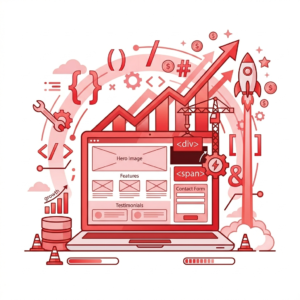
Development involves building the website using programming technologies. It includes:
- Using programming languages: Such as HTML, CSS, JavaScript, and PHP to build the website.
- Front-End development: Building the part that users interact with.
- Back-End development: Creating the system that manages data and runs the website.
- CMS integration: Such as WordPress or Joomla to simplify content management and updates.
4. Website Testing
Before launching the website, it must be tested to ensure it works correctly on all devices and browsers. Testing includes:
- Performance testing: Ensuring fast loading speed and responsiveness.
- Security testing: Protecting the website from attacks and breaches.
- Compatibility testing: Ensuring the website works well across different devices and browsers.
5. Launch and Maintenance
After completing all tests, the website is launched. After launch, you need to:
- Monitor performance: Track website performance using tools like Google Analytics.
- Update content: Regularly add new content to keep visitors engaged.
- Regular maintenance: Fix errors and apply security updates to ensure continuous operation.
Website Design and Development Tools
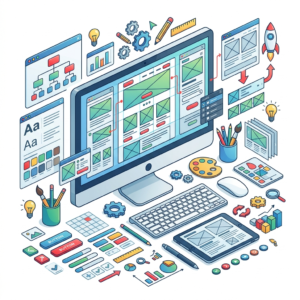
There are many tools that help in website design and development, including:
- Adobe XD and Sketch: For interface design.
- Visual Studio Code and Sublime Text: For code editing.
- Bootstrap: A framework that helps develop responsive interfaces.
- WordPress and Joomla: For easy content management.
Website design and development is an integrated process that requires careful planning, creative design, technical development, and thorough testing. By using the right tools and following the correct steps, you can create a website that attracts visitors and enhances your digital presence.