


Traditional Marketing vs. Digital Marketing: Which is Best for Your Business?
Marketing is an integral part of any successful business, and the field has evolved significantly with technological advancements. Today, business owners face multiple choices between traditional and digital marketing. In this article, we will explore the differences between the two, highlighting the pros and cons of each to help you decide on the best strategy for your business.
1. What is Traditional Marketing?
Definition: Traditional marketing refers to conventional methods used to promote products and services before the internet era.
-
Forms: Print ads (newspapers, magazines), TV and radio commercials, billboards, and direct mail.
-
Pros: Massive reach, high credibility among older demographics, and physical interaction (flyers/samples).
-
Cons: High costs, difficulty in measuring ROI precisely, and limited targeting capabilities.
2. What is Digital Marketing?
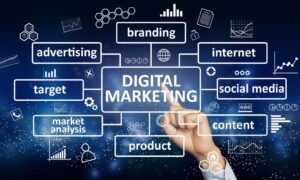
Definition: Digital marketing utilizes the internet and electronic devices to promote products.
-
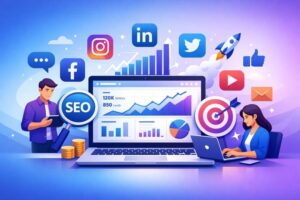
Channels: SEO/SEM, Social Media Marketing (Facebook, Instagram, X), Content Marketing, and Email Marketing.
-
Pros: Cost-effectiveness, precision targeting (demographics/interests), real-time analytics, and instant engagement.
-
Cons: High competition/cluttered space, requirement for constant updates, and privacy/security concerns.
3. Key Differences
-
Audience Interaction: Traditional is one-way communication, while digital allows for a two-way real-time dialogue (comments/messages).
-
Performance Measurement: Traditional relies on estimates; digital provides advanced analytical tools to track every click and user behavior.
-
Cost and Efficiency: Traditional often requires large budgets for TV or billboards; digital offers flexible options for any budget level.
-
Technology: Traditional uses print and limited electronic media, whereas digital leverages rapid innovations in smart devices and AI.
4. Choosing the Right Strategy for Your Business
Choosing between them depends on several factors:
-
Understand Your Audience: If your customers spend their time online, digital is the way. If they prefer newspapers or TV, traditional might still hold value.
-
Marketing Budget: If funds are limited, digital marketing offers a much better “bang for your buck.”
-
Marketing Goals: For broad brand awareness, a mix of both can work. For direct conversions and tracking, digital is superior.
-
Flexibility: Digital allows you to pivot and adjust your strategy instantly based on real-time data.
Conclusion: Both traditional and digital marketing have their place. The optimal solution often lies in an integrated approach. By understanding the differences, you can make informed decisions that drive impressive results for your business.