


Marketing is considered one of the fundamental pillars of any successful organization. It is no longer just a way to sell products or services, but a comprehensive system based on understanding customer behavior and delivering real value that meets their needs. With rapid technological advancements and changing consumption patterns, marketing has become more diverse and innovative, requiring smart strategies and advanced tools to achieve success and sustainability.
What is Marketing?
Marketing is an integrated process that includes studying the market, understanding customer needs, developing products or services that match those needs, and promoting them effectively to achieve organizational goals. It is not limited to selling—it also involves building long-term relationships with customers and strengthening trust in the brand.
The Importance of Marketing in Business Success
Marketing plays a vital role in the growth and expansion of companies. It helps businesses gain deeper insights into customers by analyzing their behavior and needs, enabling them to offer more accurate and effective solutions. It also contributes to building long-term relationships through continuous communication and delivering outstanding customer experiences that enhance loyalty.
In addition, marketing increases brand awareness, helping companies reach a wider audience and establish a strong market presence, which directly leads to increased sales and profitability.
Core Marketing Strategies
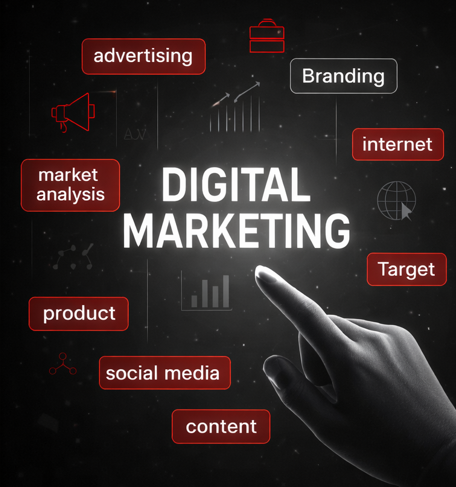
The success of any marketing plan depends on choosing the right strategies. Digital marketing is one of the most important modern trends, relying on the internet and digital platforms to reach customers quickly and accurately. This includes search engine optimization (SEO), social media marketing, paid advertising, and email marketing.
Despite the digital transformation, traditional marketing still holds value, especially in certain markets. It includes television advertising, print media, and public relations, all of which help build a strong brand image.
Content marketing is also one of the most effective strategies, focusing on delivering valuable and engaging content that attracts customers and builds trust, leading to stronger relationships and long-term results.
Social media marketing serves as a powerful tool for direct interaction with audiences, allowing companies to build communities around their brand and increase awareness through consistent content and daily engagement.
Search engine optimization (SEO) remains one of the most essential tools for improving website visibility in search results, attracting targeted organic traffic, and achieving sustainable growth.
Modern Marketing Tools
With the evolution of the field, many tools have emerged to help marketers execute their strategies efficiently. Among the most important are data analytics tools that enable a deeper understanding of user behavior and accurate measurement of marketing campaign performance, supporting data-driven decision-making.
There are also social media management tools that simplify content scheduling and audience engagement, in addition to marketing automation tools that streamline campaign management and save time and effort.
The Importance of Market Research
Market research is a critical component of successful marketing. It helps gather accurate information about customers, competitors, and current trends. With these insights, companies can make strategic decisions based on a real understanding of the market.
Competitor analysis also helps identify their strengths and weaknesses, giving businesses an opportunity to differentiate and deliver unique value. Moreover, market research allows companies to anticipate future changes and adapt quickly.
Customer Experience and Its Role in Marketing
Customer experience has become one of the most important success factors in modern marketing. It is not only about attracting customers but also about retaining them and delivering an exceptional experience at every stage of interaction.
Improving customer experience requires understanding the full customer journey, from awareness to post-purchase, and optimizing every touchpoint. Personalizing the experience based on customer data also increases satisfaction and strengthens brand relationships.
Conclusion
Marketing is a broad and dynamic field that requires a combination of creativity, analysis, and strategy to achieve success. By understanding marketing fundamentals, utilizing modern tools, and applying the right strategies, businesses can build a strong market presence and achieve sustainable growth.
Success in marketing is not only about knowledge but also about the ability to adapt to continuous changes and deliver real value to customers—this is the foundation of long-term success in the business world.