The Importance of Color Harmony in Design

Color harmony is one of the most important elements in design, as it adds beauty and visual appeal to any creative work. Colors are not just decorative elements; they are a visual language that helps communicate messages more clearly and creates strong impressions in the audience’s mind. An inconsistent color scheme can confuse users and weaken a brand’s impact, while harmonious colors make a design clearer and more professional.

The Relationship Between Color Harmony and Brand Identity

Colors are a fundamental element of brand identity. They influence how customers interact with your products or services and help create an emotional connection between them and your brand. Studies indicate that color can increase brand recognition by up to 80%. Therefore, it is essential to choose harmonious colors that reflect the brand’s personality and support its marketing message.

Color Meanings in Design

  • Red: Strength, love, and excitement. Ideal for CTA buttons such as “Buy Now.”

  • Yellow: Happiness, energy, and attention. Commonly used in children’s products and warning signs.

  • Blue: Professionalism, stability, and calmness. Preferred by technology and financial companies.

  • Orange: Creativity, motivation, and activity. Suitable for healthy food brands and interactive content.

What Is the Color Wheel?

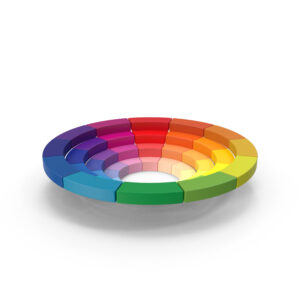
The color wheel is a fundamental tool for understanding relationships between colors. It consists of primary colors (red, blue, yellow), secondary colors (green, orange, purple), and tertiary colors created by mixing them. Through the color wheel, designers can select complementary or contrasting colors to achieve visual harmony.

Types of Color Schemes

  • Complementary Colors: Colors opposite each other on the color wheel, creating strong contrast.

  • Analogous Colors: Colors next to each other on the color wheel, providing harmony and balance.

  • Monochromatic Colors: Different shades of the same color, giving an elegant and minimal appearance.

Tools for Choosing and Coordinating Colors

  • Adobe Color CC

  • Coolors.co

  • Colour Lovers

  • Canva Color Palette Generator

  • Paletton

  • Colorhexa

Choosing Colors Based on the Target Audience

Selecting colors does not rely only on aesthetic harmony; it must also match the target audience. Bright colors like yellow and orange suit children and entertainment content, while blue, gray, and calm tones are more appropriate for business professionals and corporate audiences.

Top 7 Tips for Achieving Color Harmony in Design

  1. Define a consistent color palette for your brand identity.

  2. Combine primary and secondary colors wisely.

  3. Use gradients to add visual depth.

  4. Apply contrasting colors to highlight important elements.

  5. Ensure your colors align with your brand personality.

  6. Use color coordination tools to save time and effort.

  7. Make sure your design looks good across all platforms.

Conclusion

Colors are not just aesthetic details; they are a strategic tool for strengthening brand power and building a strong visual identity that supports success in digital marketing. Following the principles of color harmony will make your designs more professional and provide your audience with a memorable visual experience.